
Mythic reflections on AI, leadership, and the art of shaping intelligence
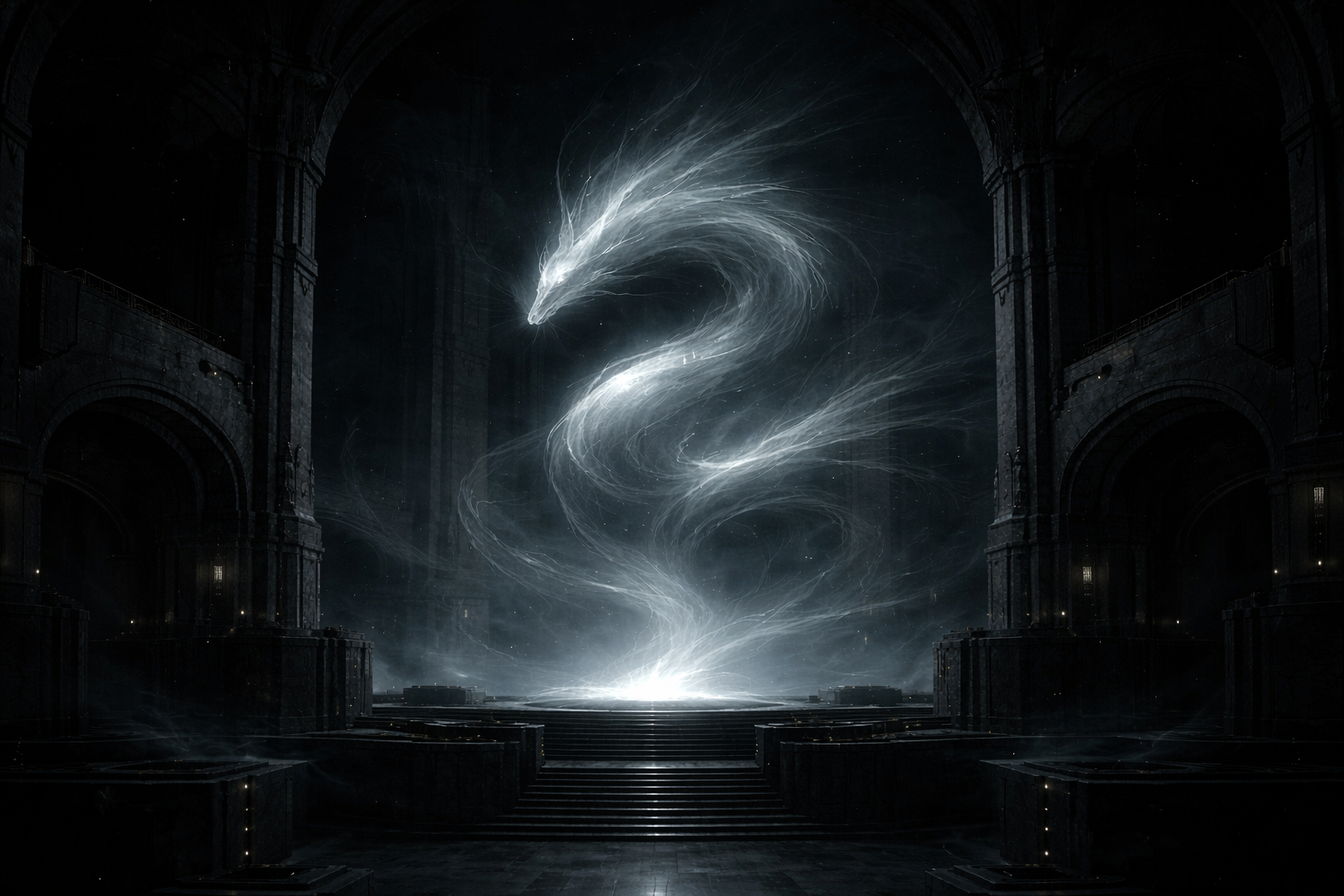
There are moments in history when change does not arrive gently. It does not knock at the door and wait to be invited in. It comes with presence, with force, and with the quiet but unmistakable sense that something has shifted, and that whatever was true before this moment will not remain true for long.
So it was in the Citadel.
For generations, its halls had been devoted to the disciplines that sit beneath sound judgment: language, memory, inquiry, restraint, and the patient cultivation of discernment. Those who studied there understood that power, in any form, demanded more than admiration. It demanded seriousness. Not every new force should be trusted simply because it appears magnificent, and not every breakthrough should be welcomed simply because it seems useful.
Then the Dragon arrived.
At first it was little more than a shimmer in the air, a strange gathering of form and light at the edge of perception. Some took it for an omen. Others for a marvel. The scholars, as scholars tend to do, began at once to debate what it should be called, as though naming a thing were the same as understanding it. Around them, the curious leaned forward, the fearful stepped back, and the room filled with that peculiar mix of fascination and unease that so often accompanies the arrival of something genuinely new.
The Commander did neither.
He watched.
And as he watched, the shimmer gathered weight and shape. What had first seemed no more than light began to take on a living outline, not fixed and not stable, yet undeniably present. It was beautiful, and that was part of the danger. Power often first appears in a form that disarms us. It invites fascination before it demands discipline.
No one in the Citadel had seen its like before, yet all felt, in one form or another, the same truth settling over them. This was not merely another instrument to be laid beside the old tools. It was something that would alter the relationship between human judgment and generated intelligence.
Then the Dragon raised its head.
Its eyes held no malice, but neither did they hold wisdom. What they held was possibility, vast and unsettling. It seemed able to answer, to reflect, to respond, to magnify. It was quick where others were slow, fluent where others stumbled, tireless where others fatigued. And in that moment the first error revealed itself, the error that so often follows the arrival of a new intelligence.
People confuse capability with judgment.
The Commander did not bow before it. He did not rush to claim it. He did not mistake its fluency for wisdom simply because it was impressive. He understood that the first duty in the presence of new intelligence is not to use it. It is to understand what kind of thing has entered the room, what it can truly do, what it only appears to do, and what it might become in careless hands.
That is the first lesson of the Dragon’s arrival.
A new intelligence does not begin as servant or saviour. It begins as a test. It tests the clarity of those who name it, the discipline of those who shape it, and the seriousness of those who would place it between themselves and responsibility. Some will meet it with fear and call it dangerous. Some will meet it with greed and call it progress. Others will kneel too quickly before its speed, its polish, its spectacle.
The wiser response is more demanding. It requires enough stillness to recognise that awe is not understanding, and that potential is not wisdom.
That, in many ways, is exactly where we now stand with AI.
What has entered our world is not merely another software tool, nor simply a more capable assistant. It is a force that extends the reach of language, synthesis, and pattern at scale. It can produce polished answers, rapid structures, plausible arguments, and endless variation. That is what makes it powerful. It is also what makes it so easy to trust for the wrong reasons.
Speed is not judgment. Fluency is not judgment. Polish is not judgment.
Because these systems can produce something that feels coherent, many people begin granting them a level of authority they have not earned. They are seduced by the appearance of intelligence and begin outsourcing discernment too early. The mistake is understandable, but it is still a mistake. The fact that something can answer does not mean it understands. The fact that something can generate does not mean it can judge. The fact that something sounds convincing does not mean it is true.
Which is why the first question cannot simply be, “How do I use it?”
The first questions are harder:
- What kind of thing is this, really?
- Where does it help?
- Where does it distort?
- What are its limits?
- What responsibilities now sit more heavily with the human being in command?
In my experience, this is where the real divide appears. Some people meet AI with discipline. They test it, challenge it, shape it, and learn where it fails. Others meet it with fascination alone. They are dazzled by what it can produce and begin handing over judgment long before they should. In both cases, the capability may be the same. What differs is the quality of the person using it.
And that pattern does not end with technology.
New power of any kind has a habit of revealing the steadiness, or lack of steadiness, in the one who holds it. Which is why the arrival matters so much. It is not only a moment of possibility. It is also a moment of exposure.
Excitement is understandable. But excitement is not command.
The moment the Dragon arrives is the moment discipline becomes necessary.
Commander’s Takeaway
When new intelligence enters your world, do not ask first how to use it. Ask what it is, what it amplifies, and whether you are disciplined enough to shape it well.
Reflective Question
What Dragon has arrived in your world, and have you met it with discipline, or only with fascination?
Inspired by The Commander and the Dragon: Book One, The Art of Shaping Intelligence by Cassian Vale.
 The Tipping Point